
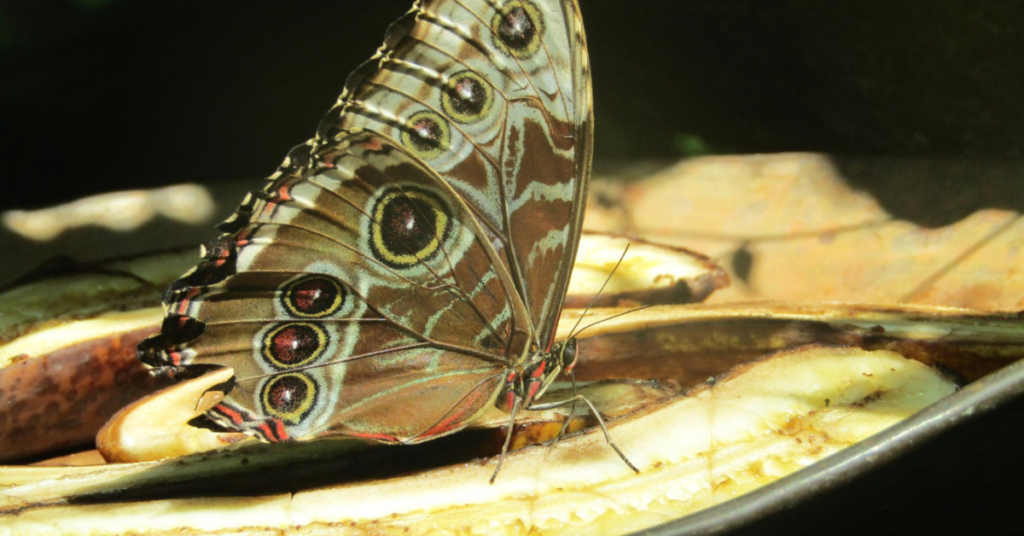
The Spanish Moon Moth (Graellsia isabellae) is one of Europe’s most exquisite and rare silk moths. With its shimmering emerald-green wings, elegant tail streamers, and delicate brown markings, the Spanish Moon Moth (Graellsia isabellae) looks like a living jewel of the night.
Native to the pine forests of the Pyrenees and certain alpine regions of France, Spain, and Switzerland, this moth is not only breathtaking but also a key indicator of healthy mountain woodland ecosystems.
Key Specifications of Spanish Moon Moth (Graellsia isabellae)
| Specification | Details |
| Scientific Name | Graellsia isabellae |
| Common Name | Spanish Moon Moth (Graellsia isabellae) |
| Family | Saturniidae (giant silk moths) |
| Wingspan | 8–10 cm (3–4 inches) |
| Appearance | Emerald-green wings with brown veins, four eye spots, and elegant tail streamers |
| Habitat | Mountain pine forests of the Pyrenees and alpine regions of France, Spain, and Switzerland |
| Diet (Adult) | None — adults lack mouthparts and do not feed |
| Larval Host Plants | Primarily Scots pine (Pinus sylvestris) and other mountain pines |
| Lifespan | Egg to adult: ~1 year; adult flight period: late spring to early summer (about 1–2 weeks) |
| Behaviour | Nocturnal; males fly at dusk and night to locate females |
| Conservation Status | Protected in Europe; considered Near Threatened in some areas due to habitat loss and climate change |
Habitat & Range
The Spanish Moon Moth (Graellsia isabellae) inhabits high-altitude pine forests, often at elevations of 1,000–1,800 metres. It is found mainly in Spain’s Pyrenees, southern France, and select alpine forests of Switzerland and Italy. Cool temperatures and an abundance of Scots pine are essential for its survival.
Life Cycle
The life cycle of the Spanish Moon Moth (Graellsia isabellae) mirrors other giant silk moths but is finely tuned to alpine conditions:
- Egg Stage – Females lay eggs on pine needles in late spring.
- Larval Stage – Bright green caterpillars feed exclusively on pine needles throughout summer, gradually developing striking black and white markings.
- Pupa Stage – In autumn, the caterpillar spins a strong cocoon, usually attached to pine branches or hidden among needles, where it overwinters.
- Adult Stage – Adults emerge in late spring or early summer, living only one to two weeks to mate and reproduce.
Adults do not feed and rely on fat reserves from the caterpillar stage.
Madagascan Moon Moth (Argema mittrei) Life Cycle
Appearance & Adaptations
The Spanish Moon Moth (Graellsia isabellae) is instantly recognisable for its translucent emerald wings and long hindwing tails, which help confuse predators like bats. Four eye-shaped markings on its wings act as a defensive display, startling birds and small mammals.
Males possess large, feathery antennae to detect female pheromones across long distances in cool mountain air.
Ecological Role
Though adults do not feed, the Spanish Moon Moth (Graellsia isabellae) plays an important ecological role. Its larvae help recycle nutrients within pine forests and provide food for birds and small mammals, supporting biodiversity in fragile alpine ecosystems.
Conservation & Threats
While not currently endangered, the Spanish Moon Moth (Graellsia isabellae) is protected under European law and listed as Near Threatened in some regions. Key threats include:
- Habitat loss from deforestation and development.
- Climate change, which can shift the distribution of host pine forests.
- Light pollution, which disrupts mating behaviour.
Conservation measures include protecting pine woodlands, reducing artificial night lighting, and monitoring wild populations.
FAQs about Spanish Moon Moth (Graellsia isabellae)
Q1. Where is the Spanish Moon Moth found?
It lives in high-altitude pine forests of Spain, southern France, Switzerland, and parts of Italy.
Q2. How long does it live?
Adult Spanish Moon Moth (Graellsia isabellae) individuals live only 1–2 weeks, focusing solely on reproduction.
Q3. What do the caterpillars eat?
Larvae feed on the needles of Scots pine and other mountain pines.
Q4. Does the adult moth feed?
No. Like many silk moths, the Spanish Moon Moth (Graellsia isabellae) lacks functional mouthparts and does not eat.
Q5. Is it endangered?
Not globally, but the Spanish Moon Moth (Graellsia isabellae) is protected and Near Threatened in some areas due to habitat loss and climate change.


