
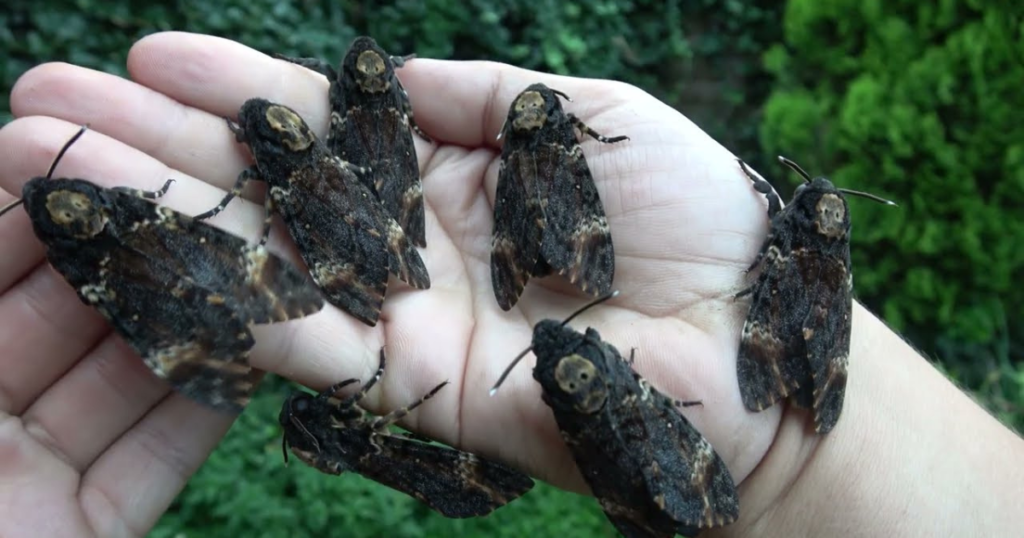
The Death’s-head Hawkmoth (Acherontia atropos) is among the most iconic and enigmatic creatures in the moth world. With its skull-shaped marking on its thorax, this moth has become a symbol of mystery, inspiring countless myths, superstitions, and even notable appearances in popular media, such as The Silence of the Lambs. However, its eerie appearance is just one of the many things that make this species so fascinating. From its nocturnal behavior to its rare ability to squeak audibly and steal honey from beehives, the Death’s-head Hawkmoth is an insect unlike any other.
Found across Europe, Africa, and parts of Asia, the Acherontia atropos moth is not only a creature of legend but also plays a significant role in the ecosystem, particularly in pollination. In this blog, we’ll explore the mysterious life of this moth, its remarkable features, and the ecological significance it holds in its habitats.
Key Specifications of Death’s-head Hawkmoth
| Specification | Details |
| Scientific Name | Acherontia atropos |
| Common Name | Death’s-head Hawkmoth |
| Family | Sphingidae (Hawk Moths) |
| Wingspan | 9–13 cm (3.5–5 inches) |
| Appearance | Dark brown and yellow forewings with a distinctive skull marking; bright yellow-orange hindwings |
| Habitat | Mediterranean, Africa, Middle East, occasionally northern Europe |
| Diet (Adult) | Nectar, sap, and honey (stolen from beehives) |
| Larval Host Plants | Potato, tomato, deadly nightshade, jasmine, and other Solanaceae plants |
| Lifespan | Egg to adult ~40–50 days; adult lifespan 4–6 weeks |
| Behavior | Nocturnal, squeaks audibly, engages in honey theft |
| Conservation Status | Not globally threatened, though impacted by habitat loss and pesticide use |
Habitat & Range
The Death’s-head Hawkmoth is primarily found in Mediterranean regions, Africa, and parts of the Middle East. It migrates seasonally to northern regions of Europe, including the UK and Scandinavia, during the warmer months. The moth thrives in farmlands, gardens, and woodlands, where nightshade-family plants such as potato and tomato grow, providing essential food for its larvae. These habitats also support the adult moth’s feeding needs, offering nectar-rich flowers.
As a migratory species, the Death’s-head Hawkmoth often adapts to a range of environments. However, agricultural expansion and habitat destruction due to urbanization and farming have led to localized declines in populations.
Life Cycle of the Death’s-head Hawkmoth
The life cycle of the Death’s-head Hawkmoth is just as dramatic as its appearance:
- Egg Stage: The female moth lays her eggs on host plants, primarily potato or nightshade. The eggs hatch in 7–10 days.
- Larval Stage: The larvae grow to impressive sizes, reaching up to 12–13 cm long. They display striking colors, including yellow, green, or brown, and feature diagonal stripes with a curved tail horn. The larvae feed on Solanaceae plants, including deadly nightshade.
- Pupa Stage: After feeding, the larvae burrow into the soil to pupate for about 3–4 weeks, undergoing a dramatic transformation.
- Adult Stage: The adult moth emerges with its distinctive skull-shaped thorax and begins its nocturnal activities, feeding on nectar and sometimes even stealing honey from beehives.
Remarkable Features & Behavior
The Death’s-head Hawkmoth is renowned for its remarkable features and behaviors:
- Skull-shaped Marking: The most famous characteristic is the skull-shaped marking on its thorax, which has contributed to its mystique and ties to superstition. This pattern is a natural adaptation that helps the moth blend into its environment, though it also invokes fear in many cultures.
- Audible Squeak: Unlike most moths, the Death’s-head Hawkmoth can squeak loudly by expelling air through its pharynx. This sound, which resembles a mouse’s squeak, is a form of defense, helping the moth startle predators and even bees when it raids their hives.
- Honey Theft: The Death’s-head Hawkmoth is one of the rare insects capable of stealing honey from beehives. It likely mimics the scent of bees to enter the hive undetected, feeding on honey without causing alarm. This behavior has fascinated scientists and made the moth the subject of much study.
Ecological Role
While the Death’s-head Hawkmoth’s adult stage is short-lived, it plays a vital role in pollination. As a nocturnal pollinator, it feeds on flowers that bloom at night, transferring pollen from plant to plant and ensuring the survival of various species. Additionally, its larvae help to recycle plant material and contribute to the ecosystem’s nutrient cycling.
Despite its fearsome appearance, the Death’s-head Hawkmoth is an important part of the food web. Its larvae are a food source for birds, bats, and small mammals, while the adults provide food for various predators in their adult form.
Sweat Bees Halictidae Habitat, Behavior and Their Pollination Role
Conservation and Threats
The Death’s-head Hawkmoth is not globally endangered, but it faces certain threats:
- Pesticide Use: Pesticides harm not only the moths directly but also reduce the availability of their host plants and nectar sources.
- Habitat Loss: Agricultural expansion and urbanization continue to encroach on the moth’s natural habitats, reducing the space in which it can thrive.
- Climate Change: Alterations in temperature and weather patterns affect the moth’s migration and the availability of its food sources.
To support local populations, we can plant night-blooming flowers in gardens, avoid the use of harmful pesticides, and encourage the conservation of natural habitats.
FAQs about Death’s-head Hawkmoth
Q1. Why is it called the Death’s-head Hawkmoth?
The name comes from the distinctive skull-shaped marking on its thorax, which has inspired many myths and superstitions over the centuries.
Q2. Does it really squeak?
Yes, the Death’s-head Hawkmoth can emit a loud, mouse-like squeak as a defense mechanism against predators and when entering beehives.
Q3. What do its caterpillars eat?
The larvae primarily feed on potato, tomato, deadly nightshade, and other plants from the Solanaceae family.
Q4. Does the adult moth eat honey?
Yes, the Death’s-head Hawkmoth is one of the few moths known to steal honey from beehives.
Q5. Is it dangerous to humans?
No, despite its eerie reputation, the Death’s-head Hawkmoth is harmless to humans.
Conclusion
The Death’s-head Hawkmoth is an insect shrouded in both mystery and biological wonder. With its skull-marked thorax, ability to squeak audibly, and notorious honey-stealing behavior, this moth continues to fascinate entomologists and nature enthusiasts alike. While it may appear intimidating, the Death’s-head Hawkmoth plays an essential role in pollination and the broader ecosystem.
To ensure that future generations can continue to marvel at this extraordinary moth, it’s important to promote conservation efforts by protecting its habitats, reducing pesticide use, and supporting biodiversity initiatives.


