
Caterpillars are one of the most amazing creatures in the insect world. Though small and often overlooked, these larvae play a significant role in nature. They are a crucial stage in the life cycle of butterflies and moths, two of the most fascinating insects. From their transformation to their importance in ecosystems, caterpillars are far more than just a stage in an insect’s development—they are essential to the environment and human agriculture. In this post, we will explore the life cycle of a caterpillar, its feeding habits, interesting facts, and environmental impact. Let’s dive deeper into understanding these remarkable creatures!
1. What are Caterpillars?
Caterpillars are the larval form of insects belonging to the order Lepidoptera, which includes butterflies and moths. They start life as eggs laid by adult butterflies or moths on specific host plants. While some may confuse them with other types of larvae, caterpillars are distinct in their physical appearance and behavior.
Caterpillars are soft-bodied, with segmented bodies that allow them to move efficiently. These creatures go through several growth stages, called molting, where they shed their exoskeleton to grow larger. They are mostly herbivores and have chewing mouthparts that help them feed on various plant species. In the insect world, caterpillars are a crucial link in the food chain, serving as food for birds, mammals, and other predators.
2. The Life Cycle of a Caterpillar
The life cycle of a caterpillar is one of the most fascinating aspects of nature. It consists of several stages, from the egg to the adult butterfly or moth. Let’s break it down:
Egg Stage:
The journey of a caterpillar begins when an adult butterfly or moth lays its eggs on a host plant. These eggs are often laid in clusters, and each egg is small and round, sometimes barely visible to the naked eye. The egg stage usually lasts for several days to weeks, depending on the species and environmental conditions. Once the caterpillar hatches from the egg, it enters the next stage of life.
Larval Stage (Caterpillar):
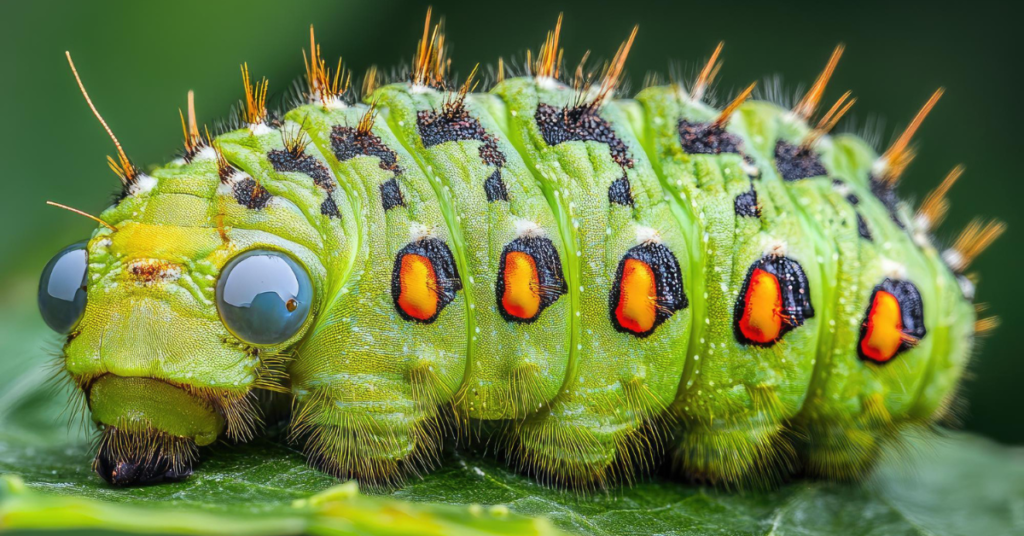
This is the stage we commonly recognize as a caterpillar. At this point, the caterpillar starts feeding aggressively on host plants, consuming vast amounts of leaves and vegetation to fuel its rapid growth. Physically, caterpillars are elongated and cylindrical, and they may have various colors, patterns, and even spines or hairs to protect themselves from predators.
During this phase, caterpillars undergo molting—shedding their outer skin as they grow. It’s a process they repeat several times until they reach their full size. As they grow, they continue to feed, storing energy that will be used in their transformation.
Pupal Stage (Chrysalis or Cocoon):
After the larval stage, the caterpillar enters the pupal stage, forming a chrysalis or cocoon. This is where the magic of transformation occurs. The caterpillar, now fully grown, finds a safe spot to begin pupation. Inside the cocoon or chrysalis, the caterpillar undergoes a process called metamorphosis, where it changes into a completely different form. This stage can last anywhere from a few weeks to months, depending on environmental factors like temperature and species.
Adult Stage (Butterfly or Moth):
Finally, the adult emerges from the chrysalis or cocoon. This adult form is either a butterfly or a moth, depending on the species. The transition from caterpillar to butterfly or moth is a stunning process of transformation, and this adult stage is when the creature will mate and lay eggs to begin the cycle again.
3. Diet and Feeding Habits
Caterpillars are primarily herbivores and have a very specific diet. Their main food sources are host plants—the plants on which the adult butterflies or moths choose to lay their eggs. Each species of caterpillar is often very selective about which plants they consume. Some caterpillars, like the Monarch caterpillar, exclusively feed on milkweed, while others have a broader range of plants.
The feeding habits of caterpillars play a vital role in the environment. As they consume plants, they help control plant populations, and their waste (frass) acts as fertilizer for the soil. However, caterpillars can also have a negative impact, especially in agriculture, where they may damage crops and plants.
4. Interesting Facts About Caterpillars
Caterpillars are full of surprising facts that make them even more fascinating. Here are some that stand out:
- Toxicity: Some caterpillars, such as the Lonomia or the poisonous caterpillar found in South America, carry potent toxins that can be dangerous to humans and animals. These toxins serve as a defense mechanism against predators.
- Camouflage: Many caterpillars have evolved camouflage to blend in with their environment. Some look like twigs, leaves, or even bird droppings, helping them avoid being eaten by predators.
- Venom: Certain caterpillars have evolved venomous spines or hairs that can cause irritation or even more serious reactions if touched. This serves as a warning to potential predators.
- Role in Ecosystems: Caterpillars are an essential part of the ecosystem. Not only do they act as prey for many animals, but they also contribute to pollination indirectly when they feed on flowering plants. This helps in the reproductive process of plants, thus sustaining the environment.
5. Common Types of Caterpillars
There are thousands of species of caterpillars across the globe, but some of the most famous include:
- Monarch Caterpillar: Perhaps the most well-known, this caterpillar feeds exclusively on milkweed and eventually transforms into the iconic Monarch butterfly.
- Tomato Hornworm: A common pest in gardens, the Tomato Hornworm feeds on tomato plants and can cause significant damage to crops.
These species can be identified by their distinctive colors, patterns, and sizes. Monarch caterpillars, for example, have black, white, and yellow stripes, while tomato hornworms are large and green with a characteristic horn-like protrusion on their rear end.
6. Environmental Impact
Caterpillars have a substantial environmental impact. While they play a key role in pollination, they also act as a food source for various animals, including birds, small mammals, and even other insects. The food chain relies heavily on caterpillars, as many predators depend on them for nutrition.
However, caterpillars can also create concerns in agricultural settings. Their feeding habits can lead to significant damage to crops. This is why many farmers use pesticides, though this often harms the broader ecosystem, including non-target species like bees and other important insects.
Conclusion
Caterpillars are more than just an insect that crawls around on leaves; they are an essential part of nature’s cycle. Their role in the ecosystem is vast from controlling plant populations to acting as a crucial part of the food chain. By understanding their life cycle, feeding habits, and the challenges they face, we can appreciate these creatures more and take action to protect their habitats. Whether you are a gardener, a farmer, or simply an insect enthusiast, understanding caterpillars is a step toward understanding the intricate web of life around us.
Let’s protect their natural habitats, appreciate their role in nature, and ensure that these fascinating creatures continue to thrive for generations to come.


