
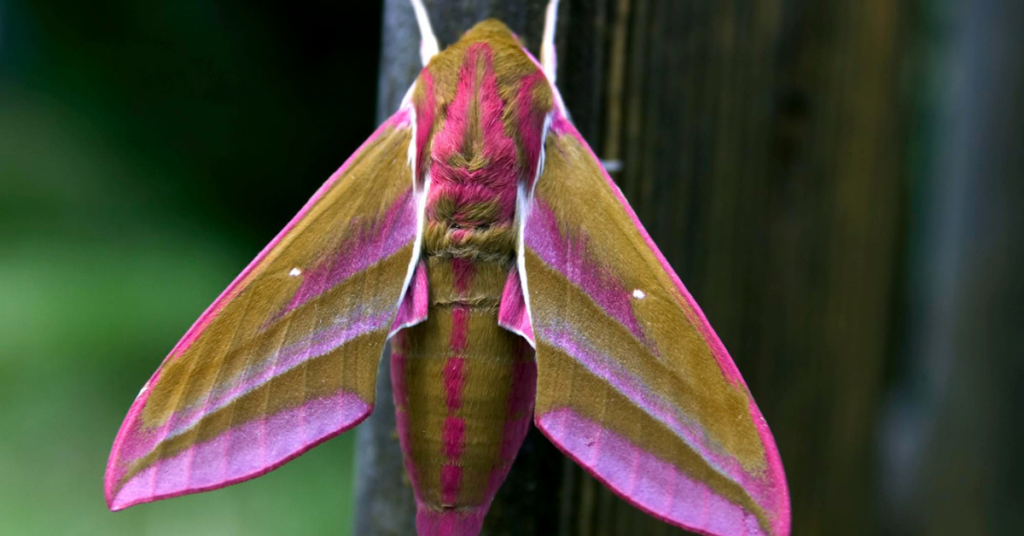
Have you ever seen an Dryocampa rubicunda that looks like it belongs in a candy shop? Meet the Rosy Maple Moth, a fuzzy, pastel coloured moth known for its bright pink and yellow wings. It is one of the most eye catching moths found in North America and a favourite among nature lovers and photographers.
First described by scientist Johan Christian Fabricius in 1793, this tiny moth has fascinated people for centuries.
What Does the Rosy Maple Moth Look Like?
The rosy maple moth is a small member of the silk moth family, but it stands out instantly because of its soft, candy like colouring.
Size
- Males: 3.2 to 4.4 cm wingspan
- Females: 3.8 to 5 cm wingspan
Females are typically slightly larger, which is common in many moth species.
Colour and Features
- Bright yellow body and hindwings
- Pink forewings with a yellow band
- Fuzzy woolly appearance
- Males have more bushy comb like antennae, used to locate females
Colours can vary between individuals, ranging from creamy shades to deeper pink tones.
Key Specifications of Rosy Maple Moth (Dryocampa rubicunda)
| Specification | Details |
| Scientific Name | Dryocampa rubicunda |
| Common Name | Rosy Maple Moth (Dryocampa rubicunda) |
| Family | Saturniidae (giant silk moths) |
| Wingspan | 3.2–5 cm (1.25–2 inches) |
| Appearance | Bright pink forewings with creamy yellow centres; fuzzy yellow body with pink legs |
| Habitat | Deciduous forests and suburban areas with abundant maple trees |
| Diet (Adult) | None — adults do not feed; they survive on fat reserves |
| Larval Host Plants | Primarily red maple and sugar maple; also silver maple and oak |
| Lifespan | Egg to adult: ~6–8 weeks; adult lifespan: 7–10 days |
| Behaviour | Nocturnal; attracted to lights; males locate females via pheromones |
| Conservation Status | Widespread and stable across its range |
Where Do Rosy Maple Moths Live?
Rosy maple moths are found across the Eastern United States and parts of Canada, including areas like Ontario and Nova Scotia.
They thrive in places where maple trees grow, such as:
- Forests and woodlands
- Suburban neighbourhoods
- Parks and gardens
Rosy Maple Moth Caterpillar: The Greenstriped Mapleworm
Before becoming a colourful moth, it begins life as a caterpillar called the Greenstriped Mapleworm.
What They Eat
These caterpillars feed mainly on the leaves of:
- Maple trees
- Other related hardwood trees
They often stay on the underside of leaves and may feed in groups during early stages.
Caterpillar Appearance
As they grow, they change colour and develop clearer markings:
- Yellow green body with dark stripes
- Spines along the sides
- Head colour can change and may become red in later stages
Fully grown caterpillars can reach around 2 inches in length.
Rosy Maple Moth Life Cycle
Rosy maple moths go through a complete metamorphosis with four main stages.
1. Eggs
- Females lay eggs about 24 hours after fertilisation
- Eggs are small, oval, and yellow
- They hatch in around 10 days to 2 weeks
- Eggs are laid in clusters on the underside of leaves
2. Larvae (Caterpillar)
- The caterpillar passes through five growth stages
- Early stages may live in groups
- Later stages become more solitary
3. Pupa
When ready to transform, the caterpillar crawls down the tree, creates a shallow underground chamber, and pupates for at least 2 weeks. Sometimes it stays underground all winter (overwintering).
4. Adult Moth
After emerging, the moth must expand and harden its wings before flying. Adult rosy maple moths live only a short time, usually long enough to mate and lay eggs.
Survival Facts and Natural Defence
Adult Moths Do Not Eat
Adult rosy maple moths do not feed. They do not have functional mouthparts, so they survive on the energy stored from their caterpillar stage.
Camouflage and Predators
Even though they look bright, their colours may help them blend in with maple seed pods and foliage. Predators include birds such as Blue Jays and Chickadees.
Frequently Asked Questions (FAQs)
Are Rosy Maple Moths rare?
Not at all! They are quite common in the eastern half of North America. Because they only come out at night, you just have to look near porch lights to find them.
Do they sting or bite?
No. Rosy Maple Moths are completely harmless to humans. They don’t have stingers, and because they don’t have mouths as adults, they couldn’t bite you even if they wanted to.
Will the caterpillars kill my maple tree?
While a large group of caterpillars can eat a lot of leaves, it usually doesn’t hurt the tree permanently. The leaves almost always grow back the following year.
How long do they live?
Their total life (from egg to moth) can be 2 to 9 months. However, once they come out of the ground as a pink and yellow moth, they usually only live for a few days to a couple of weeks.
Where do they lay their eggs?
Females lay tiny yellow eggs in groups of 10 to 40 on the underside of maple leaves. They can lay up to 200 eggs in their short lifetime.


