
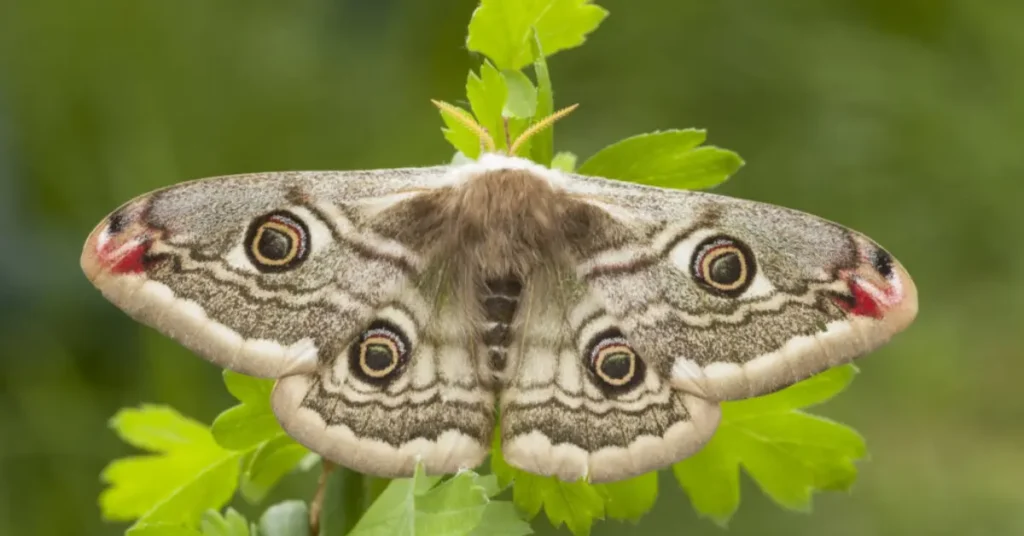
The Emperor Moth (Saturnia pavonia) is one of Europe’s most spectacular moths, known for its vivid eye-spot markings and vibrant colours. Found across heaths, moorlands, and open woodlands, the Emperor Moth (Saturnia pavonia) is a true springtime icon, typically emerging from late March through June.
Males are particularly eye-catching with their fast, zig-zag daytime flight and striking orange-brown wings patterned with large eyespots. Females are larger, slower, and more subdued in colour, but equally essential to the species’ fascinating life cycle.
Key Specifications of Emperor Moth (Saturnia pavonia)
| Specification | Details |
| Scientific Name | Saturnia pavonia |
| Common Name | Emperor Moth (Saturnia pavonia) |
| Family | Saturniidae (giant silk moths) |
| Wingspan | Males 50–70 mm; females 70–90 mm |
| Appearance | Males orange-brown with bold eye-spots; females grey-brown with similar eye-spots |
| Habitat | Heathlands, moorlands, bogs, open woodland and scrub across Europe |
| Diet (Adult) | None — adults lack functional mouthparts |
| Larval Host Plants | Heather, bramble, hawthorn, birch, meadowsweet, willow and other shrubs |
| Lifespan | Egg to adult ~11 months; adult flight period 2–3 weeks |
| Behaviour | Males fly by day seeking females; females mostly stationary and nocturnal |
| Conservation Status | Widespread and stable, but locally vulnerable to habitat loss |
Habitat & Behaviour
The Emperor Moth (Saturnia pavonia) prefers open, sunny habitats such as heath, moorland, and scrubby woodland edges. Its range spans most of Europe, from the British Isles and Scandinavia to parts of northern Africa and western Asia.
Male Emperor Moth (Saturnia pavonia) are strong daytime fliers, using their large, feathery antennae to detect female pheromones from distances of up to several kilometres. Females, larger and slower, release powerful scents at dusk to attract mates and usually fly only after pairing.
Life Cycle
The Emperor Moth (Saturnia pavonia) follows a classic silk moth cycle shaped by northern seasons:
- Egg Stage – Eggs are laid on host plants like heather, bramble, or willow, hatching in about 2–3 weeks.
- Larval Stage – The caterpillars begin black and hairy, later turning bright green with yellow and black rings. They feed all summer on host shrubs.
- Pupa Stage – By late summer, the larvae spin tough pear-shaped cocoons low to the ground where they overwinter.
- Adult Stage – Adults emerge in spring, living only 2–3 weeks to mate and lay eggs. They do not feed as adults.
Appearance & Adaptations
Both sexes of Emperor Moth (Saturnia pavonia) display striking eyespots on each wing that mimic predator eyes, deterring birds and other threats. Males have brighter orange-brown colouring and narrower wings, ideal for swift flight. Females are broader and greyer, camouflaging perfectly while resting on heather or birch.
Ecological Role
Even though adults do not eat, the Emperor Moth (Saturnia pavonia) plays a vital part in ecosystems. Its caterpillars feed on a variety of native shrubs, recycling plant material and serving as food for birds and small mammals. The species also indicates healthy heathland and moorland habitats.
Conservation & Threats
The Emperor Moth (Saturnia pavonia) remains widespread and is not globally endangered. However, habitat loss, intensive grazing, and climate changes can locally reduce populations. Protecting heathlands, reducing pesticide use, and maintaining diverse shrub growth are key steps in conservation.
FAQs about Emperor Moth (Saturnia pavonia)
Q1. When can I see the Emperor Moth?
Adults of the Emperor Moth (Saturnia pavonia) usually fly from March to June, with males active during sunny days and females at dusk.
Q2. Do adult Emperor Moths eat?
No. The adult Emperor Moth (Saturnia pavonia) lacks mouthparts and lives only long enough to mate and lay eggs.
Q3. How large is it?
Males have a wingspan of 50–70 mm, while females reach 70–90 mm, making them Europe’s largest native silk moth.
Q4. What plants do the caterpillars feed on?
Larvae of the Emperor Moth (Saturnia pavonia) feed on heather, bramble, hawthorn, birch, willow, and similar shrubs.
Q5. Is the Emperor Moth rare?
It is generally widespread and stable across Europe but can be locally scarce where heathland is lost.


