
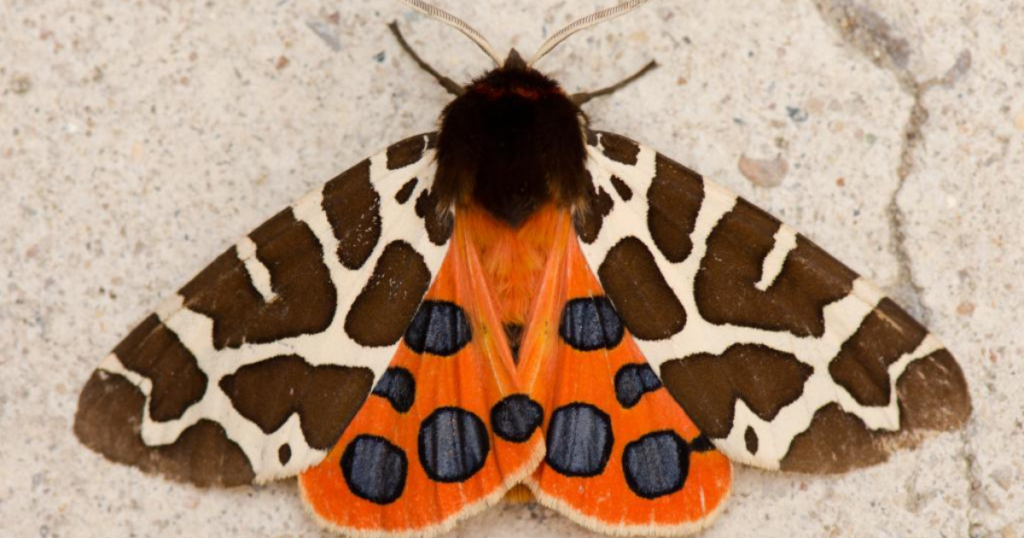
The Garden Tiger Moth (Arctia caja) is one of the most visually striking moth species found across Europe, North America, and parts of Asia. Known for its vibrant colors and intricate patterns, this moth is not only a marvel of nature but also an essential component of local ecosystems. In this post, we will delve into the fascinating world of the Garden Tiger Moth, exploring its appearance, life cycle, behavior, and the crucial role it plays in the environment.
Key Specifications of Garden Tiger Moth (Arctia caja)
| Specification | Details |
| Scientific Name | Arctia caja |
| Common Name | Garden Tiger Moth |
| Family | Erebidae (formerly Arctiidae — tiger moths) |
| Wingspan | 45–65 mm (1.8–2.5 inches) |
| Appearance | Brown-and-white forewings; orange hindwings with black spots |
| Habitat | Meadows, gardens, woodlands, coastal dunes across Europe, North America, and parts of Asia |
| Diet (Adult) | Adults feed very little or not at all; occasionally sip nectar |
| Larval Host Plants | Nettle, dock, dandelion, plantain, burdock, raspberry, and other herbaceous plants |
| Lifespan | Egg to adult: ~1 year; adult flight period: midsummer (June–August) |
| Behaviour | Nocturnal; uses bright hindwings to deter predators when disturbed |
| Conservation Status | Declining in parts of Europe due to habitat loss and pesticide use |
Habitat & Range
The Garden Tiger Moth is found across a broad range, from Europe to Northern Asia and North America. Its preferred habitats include gardens, meadows, woodlands, and coastal dunes, areas that provide the ideal conditions for the moth’s larval host plants. The moth is particularly common in rural and suburban settings where herbaceous plants like dandelions, nettles, and raspberries thrive. These plants provide a rich food source for the moth’s larvae and are vital for its survival.
Despite its widespread distribution, the Garden Tiger Moth is somewhat sensitive to habitat changes. Urbanization, agricultural expansion, and the use of pesticides have all impacted its populations, especially in some European regions.
Life Cycle of the Garden Tiger Moth
The life cycle of the Garden Tiger Moth is a multi-stage transformation that spans about one year, from egg to adult. Below, we explore each stage in detail:
- Egg Stage
The Garden Tiger Moth begins its life as an egg laid on the leaves of specific plants, often in late summer. Female moths are selective when laying their eggs, ensuring they are placed on herbaceous plants such as nettles and raspberries, which are rich in nutrients essential for the larvae.
- Larval Stage (Woolly Bear Caterpillar)
The newly hatched larvae are known as woolly bear caterpillars due to their dense covering of orange-brown hairs. These caterpillars are voracious feeders and consume a wide variety of low-growing plants, including plantains, burdock, and raspberry leaves. During the winter months, the larvae enter a period of dormancy, overwintering as partly grown caterpillars that will resume feeding in spring.
- Pupa Stage
In spring, the woolly bear caterpillar prepares for the next stage of development by forming a loose cocoon made of silk and its own hairs. Inside this cocoon, the caterpillar undergoes its transformation into a pupa. The pupa stage lasts several weeks, after which the adult moth will emerge.
- Adult Stage
The Garden Tiger Moth emerges as an adult in late spring to early summer, from June to August. The adult moth has a lifespan of approximately 2–3 weeks, during which it primarily focuses on reproduction. The moth is nocturnal and is often seen flying at night, attracted to sources of light.
Appearance & Defence
The Garden Tiger Moth boasts a striking appearance that serves two important functions: camouflage and aposematism.
- Camouflage: When resting, the moth’s forewings, which are brown and white, help it blend into its surroundings, mimicking tree bark or lichen. This camouflage makes it difficult for predators to spot the moth while it rests during the day.
- Aposematism: When threatened, the moth reveals its vibrant orange hindwings adorned with black spots. These bright colors serve as a warning to predators, signaling that the moth may be toxic or distasteful. The toxins come from the plants the caterpillars consume, particularly nettles and raspberries, which are rich in alkaloids. These toxins make the moth unpalatable to many predators, including birds.
Additionally, the woolly bear caterpillar’s dense covering of hairs acts as a physical deterrent, making it unappealing to small mammals and birds.
Ecological Role of the Garden Tiger Moth
The Garden Tiger Moth plays a crucial role in its ecosystem. Its larvae help regulate plant populations by feeding on a variety of herbaceous plants, such as dandelions, burdock, and nettles. By consuming these plants, the moth larvae prevent the unchecked growth of weeds, contributing to the overall health of the ecosystem.
Furthermore, the adult Garden Tiger Moth is a pollinator. While it does not feed heavily, it contributes to the pollination of night-blooming flowers, transferring pollen as it searches for nectar. This pollination helps maintain plant biodiversity and supports the reproductive cycles of various species.
Conservation & Threats
Though the Garden Tiger Moth is still relatively common, its population has been decreasing in some regions due to various threats:
- Habitat loss: The moth relies on specific habitats like wildflower meadows and woodlands, but these areas are increasingly being lost to urbanization and intensive farming practices.
- Pesticide use: Widespread pesticide use harms the moth’s larvae by reducing the availability of food plants and directly affecting the moth’s population.
- Climate change: Shifts in climate can disrupt the timing of the moth’s life cycle, impacting the availability of food and altering patterns of reproduction and overwintering success.
Conservation efforts are focusing on addressing these challenges. Protecting natural habitats, reducing pesticide use, and promoting wildflower conservation are key strategies to help preserve the Garden Tiger Moth and other species that rely on similar ecosystems.
How to Help the Garden Tiger Moth
If you want to attract and protect the Garden Tiger Moth in your area, here are some practical steps you can take:
- Plant native host plants: Encourage the growth of plants such as nettles, dandelions, and raspberries—which are vital food sources for the larvae.
- Avoid pesticide use: Pesticides harm not just the Garden Tiger Moth, but also other beneficial insects. Use natural pest control methods to keep your garden healthy without harming moths.
- Support habitat preservation: If you have space, plant wildflowers and create a moth-friendly garden. Avoid disturbing natural meadows and woodlands that serve as habitats for moths and other wildlife.
- Participate in conservation efforts: Support local conservation initiatives aimed at preserving moth habitats and reducing the impact of climate change on local species.
Conclusion
The Garden Tiger Moth (Arctia caja) is a striking and important species in temperate ecosystems. Its vibrant appearance, fascinating life cycle, and ecological role as both a pollinator and pest control agent make it a species worth protecting. However, this beautiful moth faces significant challenges from habitat loss, pesticide use, and climate change. By supporting conservation efforts and making simple changes to our gardens and habits, we can help ensure that the Garden Tiger Moth continues to thrive for generations to come.


