
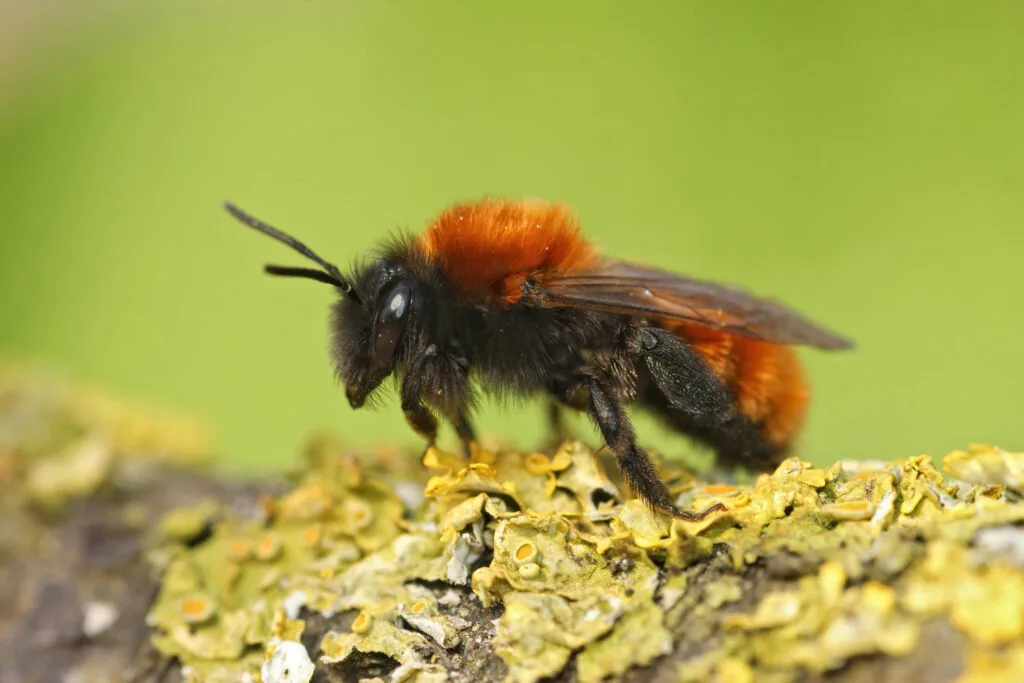
Bombus auricomus is a spieces of bumblebee commonly known as black and gold bumble bee. This species found in eastern North America, It is also famous for its golden yellow and black colour. These colours are considered as its recognition. This bumblebee plays an important role in pollination, especially for wildflowers and agricultural crops.
It gets food from many types of plants, including thistles, delphiniums, teasels, echinacea, bergamot, penstemons, clovers, prairie clovers, and vetches.
This bumblebee spieces are large, female measuring around 2.5cm in length, while workers and males are smaller up to 1.7cm to 2cm.
Unlike honeybees, the Bombus auricomus bumblebee forms seasonal colonies that last only a few months each year. Despite its short colony life, its pollination impact on wild and cultivated plants is significant.
Key Specifications of Black and gold bumble bee
| Specification | Details |
| Scientific Name | Bombus auricomus |
| Common Name | Black and gold bumblebee |
| Family | Apidae |
| Size | Queen: 2.5cm; workers and males are smaller up to 1.7cm to 2cm |
| Appearance | Black body with yellow thorax bands and a golden tail |
| Habitat | North American prairies, meadows, open woodlands |
| Diet | Nectar and pollen from prairie wildflowers |
| Lifespan | Colonies last 3–4 months; queens live up to 1 year |
| Nesting | Abandoned rodent burrows, grassy tussocks, underground cavities |
| Behaviour | Social; forms annual colonies with one queen |
| Conservation Status | Near Threatened in some regions due to habitat loss |
Habitat & Behaviour
The Bombus auricomus (Black and gold bumble bee) found across central and eastern North America in meadows, prairies, and open woodlands Preferring undisturbed grassy landscapes, It builds its nest in ld rodent burrows or under thick of grass. Colonies are typically small, with one queen and a few dozen to a few hundred workers.
A social species, the Bombus auricomus is active from spring through late summer. Worker bumblebees travel 1–2 km to collect food and pollinate plants.
Diet & Pollination Role
Feeding on nectar and pollen, the Bombus auricomus (Black and gold bumble bee) is a crucial pollinator for prairie wildflowers such as coneflowers, goldenrods, and milkweeds, as well as crops like tomatoes, peppers, and berries. Its long tongue and fuzzy body enable efficient pollen transfer, supporting both natural ecosystems and agriculture.
Life Cycle of Bumble Bee
The Bombus auricomus (Black and gold bumble bee) follows an annual life cycle. Overwintered queens emerge in spring to establish nests and lay eggs. Workers develop to forage and care for brood through summer. In late summer, new queens and males are produced; only the fertilised queens overwinter to start new colonies the next year.
Conservation & Threats of bumblebee
While not globally endangered, the Bombus auricomus (Black and gold bumble bee) faces regional population declines due to:
- Prairie habitat loss from agriculture and urbanisation.
- Pesticide exposure that harms pollinators.
- Climate change altering flowering cycles.
Conservation efforts include prairie restoration, pollinator-friendly planting, and pesticide reduction to safeguard the golden tailed bumblebee.
FAQs
Q1. Where is the black and gold bumble bee found?
The Bombus auricomus inhabits central and eastern North American prairies, meadows, and open woodlands.
Q2.Bombus auricomus are aggressive?
No. The bumble bees is generally non-aggressive and stings only when its nest is disturbed.
Q3. How Bombus auricomus help agriculture?
By pollinating crops like tomatoes, peppers, and berries, the Bombus auricomus boosts yields naturally.
Q4. How can I attract them to my garden?
Plant native wildflowers like coneflowers and milkweed, avoid pesticides, and provide grassy nesting spots for Golden Tailed bee (Bombus auricomus).
Q5. What is its conservation status of black and gold bumble bee?
It is listed as Near Threatened in some areas due to habitat loss and pesticide use.


