
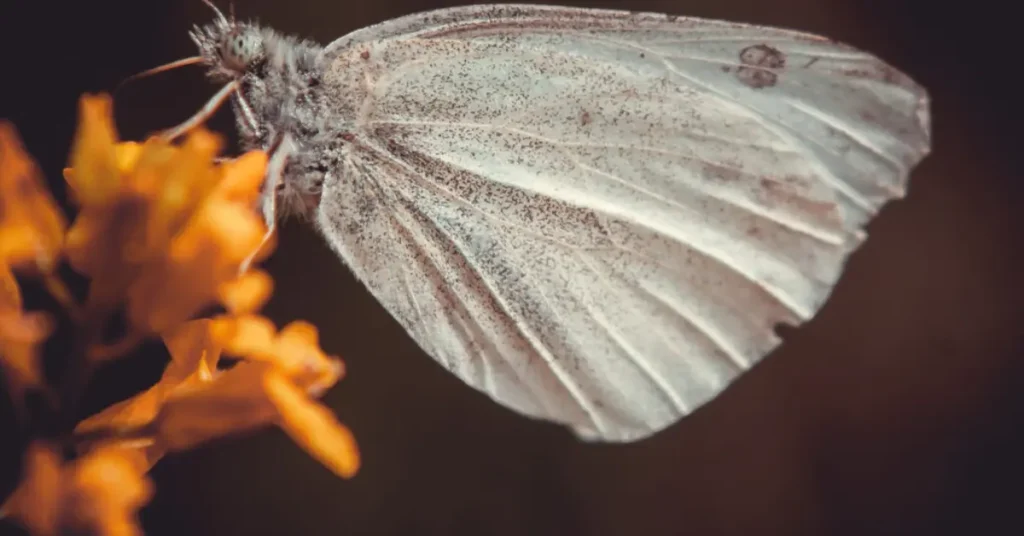
The White Witch Moth (Thysania agrippina) is a true legend of the insect world. Famous for possessing the largest wingspan of any moth—often 25 to 30 cm (10–12 in) and occasionally exceeding 30 cm (almost 1 ft)—this giant is both delicate and mysterious. Its pale silvery-grey wings, laced with intricate dark marbling, make it a master of camouflage on tree bark and rainforest trunks.
Found mainly in Central and South American rainforests, the White Witch Moth (Thysania agrippina) is sometimes called the “Ghost Moth” or “Great Grey Witch” because of its ghost-like flight and striking, almost supernatural, appearance.
Key Specifications of White Witch Moth (Thysania agrippina)
| Specification | Details |
| Scientific Name | Thysania agrippina |
| Common Name | White Witch Moth (Thysania agrippina), Ghost Moth, Great Grey Witch |
| Family | Erebidae (formerly Noctuidae) |
| Wingspan | Typically 25–30 cm (10–12 in), with confirmed records over 30 cm |
| Appearance | Silvery-white to pale grey wings with brown/black marbled lines and subtle eye spots |
| Habitat | Tropical and subtropical forests of Central and South America (Brazil, Peru, Mexico, etc.) |
| Diet (Adult) | None — adults lack functional mouthparts |
| Larval Host Plants | Fabaceae family trees and shrubs (e.g., legumes, acacias) |
| Lifespan | Egg to adult: several weeks; adult life: ~7–10 days |
| Behaviour | Nocturnal; exceptional tree-bark mimicry; silent glider |
| Conservation Status | Not formally listed, but dependent on healthy rainforest habitats |
Habitat & Range
The White Witch Moth (Thysania agrippina) inhabits rainforests and moist lowland forests of Central and South America, with confirmed sightings from Mexico through Brazil and Peru. It typically roosts on tree trunks during the day, blending so well with bark and lichen that even predators struggle to detect it.
Life Cycle & Reproduction
The life of the White Witch Moth (Thysania agrippina) follows the classic lepidopteran stages:
- Eggs – Females lay eggs on host plants from the pea (Fabaceae) family.
- Caterpillar Stage – The larvae feed on leaves of these host plants, storing nutrients for the non-feeding adult stage.
- Pupa Stage – Caterpillars pupate in concealed spots, forming cocoons that may take weeks to develop depending on temperature and humidity.
- Adult Stage – Adults emerge with massive wings and no functional mouthparts, living about 7–10 days, focused only on reproduction.
Unique Features & Survival Strategies
The White Witch Moth (Thysania agrippina) owes much of its mystique to its remarkable features:
- Record Wingspan – It is widely regarded as the moth with the largest wingspan on Earth, surpassing even the Atlas Moth in sheer spread.
- Bark Camouflage – Complex marbled patterns on its wings mimic tree bark and lichen, rendering it almost invisible during the day.
- Silent Flight – Its large but light wings allow nearly soundless movement, helping evade bats and birds at night.
Ecological Importance
While adult White Witch Moth (Thysania agrippina) individuals don’t feed, their caterpillars contribute to forest nutrient cycling by pruning host plant leaves and serving as prey for birds, reptiles, and small mammals. Their presence signals healthy, undisturbed rainforest ecosystems.
Conservation & Threats
Although not officially classified as endangered, the White Witch Moth (Thysania agrippina) depends on intact tropical forests. Deforestation, logging, and agricultural expansion threaten its habitat. Protecting rainforests and encouraging sustainable land use are key to preserving this spectacular insect.
FAQs about White Witch Moth (Thysania agrippina)
Q1. How big can the White Witch Moth get?
The White Witch Moth (Thysania agrippina) can reach a wingspan of over 30 cm (nearly 1 ft), the largest documented among all moths.
Q2. Does the White Witch Moth eat?
No. Adult White Witch Moths lack functional mouthparts and survive on energy stored during their caterpillar stage.
Q3. Where can it be found?
It inhabits Central and South American rainforests, including Brazil, Peru, Mexico, and neighbouring countries.
Q4. Why is it sometimes called the “Ghost Moth”?
Because of its pale, spectral colouring and silent, gliding flight, the White Witch Moth (Thysania agrippina) is nicknamed the Ghost or Great Grey Witch.
Q5. Is it endangered?
Not formally listed, but habitat loss and rainforest destruction pose long-term threats to the White Witch Moth (Thysania agrippina).


