

Best Dog Food for Small Breeds Dog – How to Choose
The best dog food for small breeds is a complete and balanced diet that provides essential nutrients to support healthy growth, maintain muscle strength, and meet their daily energy needs. Small breeds, such as Chihuahuas, Pomeranians, Yorkshire Terriers, and Dachshunds, may benefit from food formulated specifically for their size and life stage. Look for dog food that provides high-quality protein, healthy fats, essential vitamins, and minerals, with kibble that is comfortable for your dog to pick up and chew.

However, the right choice depends on your dog’s age, activity level, body condition, and overall health. Puppies need food designed for growth, while adult dogs require balanced nutrition to maintain a healthy weight. Senior dogs may need a different nutritional approach depending on their individual needs. Before choosing a product, check that it is labelled as complete and balanced for your dog’s life stage, follow the feeding guidelines, and consult your veterinarian if your dog has specific dietary requirements.
What Nutrients Do Small Breed Dogs Need?
Small breed dogs need a balanced diet containing protein, healthy fats, carbohydrates, vitamins, minerals, and water to support their energy levels, muscle health, digestion, and overall well-being. Their nutritional requirements vary depending on age, activity level, and health. Choose a complete and balanced dog food formulated for your pet’s life stage, and check its nutritional information before purchasing. According to the Merck Veterinary Manual, providing the right balance of essential nutrients is important for maintaining your dog’s health.
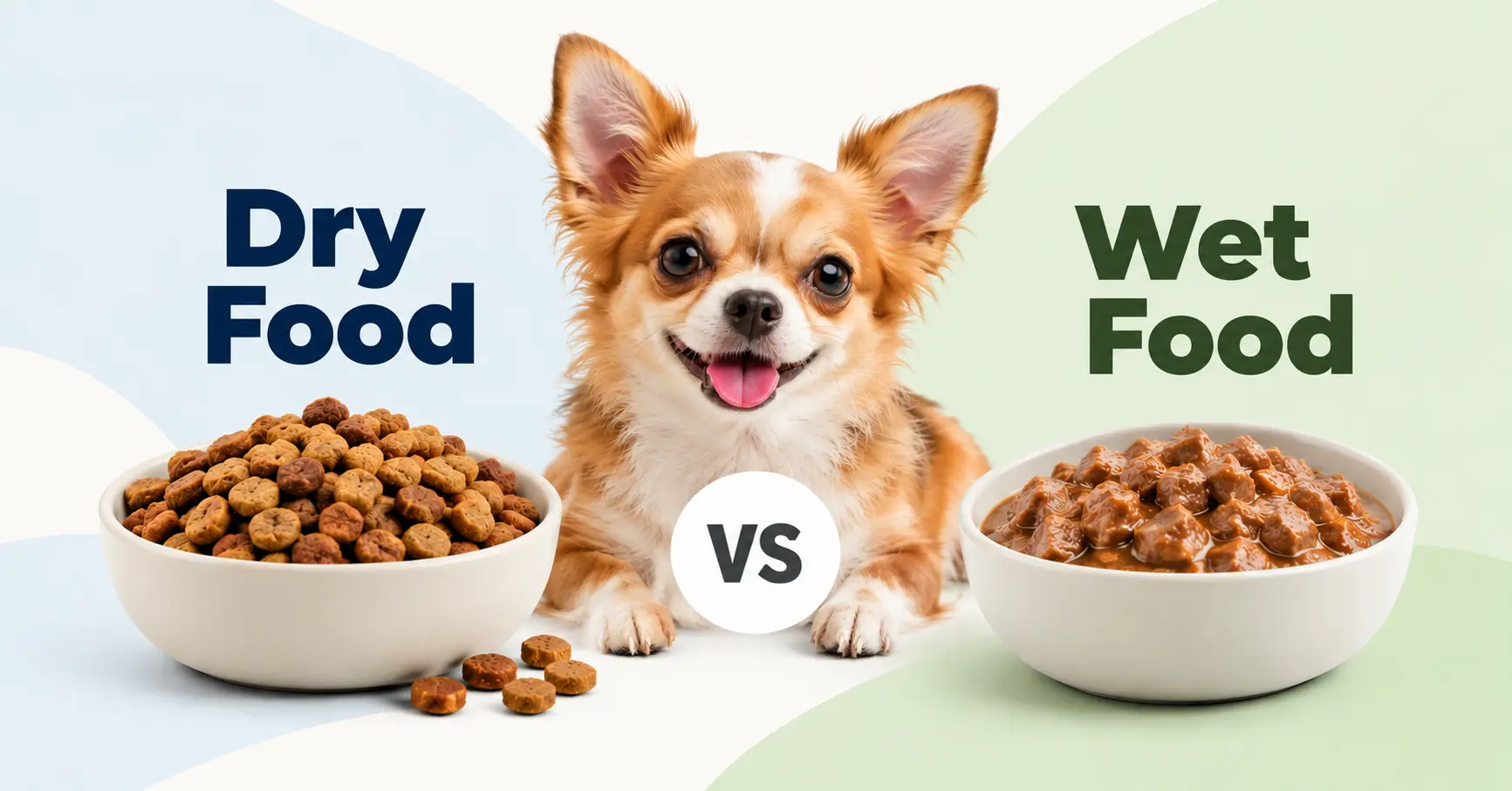
Dry Food vs. Wet Food for Small Dogs
Both dry and wet dog food can provide balanced nutrition for small breed dogs when formulated to meet their nutritional needs. Dry food is convenient to store, easy to portion, and often more economical, while wet food contains more moisture and may be more appealing to picky eaters. The best choice depends on your dog’s preferences, hydration needs, dental health, and overall condition. According to the American Kennel Club (AKC), both options have benefits, so check that the food is complete and balanced for your dog’s life stage before making a decision.
Feeding Small Dogs by Life Stage
Small dogs need different feeding schedules as they grow. Age helps determine how often they should eat, while body weight, activity level, and health influence their daily food portions. Following an age-appropriate routine can help maintain consistent energy levels and support healthy development.
Feeding Tips for Small Breed Puppies
Small breed puppies need frequent meals to meet their growth requirements. As a general guide, puppies aged 8–12 weeks should eat four meals daily, while those aged 3–6 months can usually eat three meals daily. From around 6–12 months, many puppies can transition to two or three meals daily, depending on their size and development. Divide the recommended daily food allowance into these meals rather than increasing the total amount. Consult your veterinarian about the appropriate schedule for very small puppies, as toy breeds may be more vulnerable to low blood sugar.
Feeding Tips for Adult Small Breed Dogs
Most adult small breed dogs do well with two meals per day, typically served in the morning and evening. This routine helps distribute their daily food intake and makes portion control easier. Measure each meal according to your dog’s nutritional needs, and account for treats in its daily calorie intake. Some dogs may benefit from a different schedule based on veterinary advice, particularly if they have specific medical or digestive needs.
Feeding Tips for Senior Small Breed Dogs
Most healthy senior small breed dogs can continue eating two meals per day, unless their veterinarian recommends another schedule. Older dogs may become less active, making portion control important for maintaining a healthy weight. If your dog has dental difficulties, a reduced appetite, or a medical condition, you may need to adjust the food’s texture, portion size, or feeding routine with veterinary guidance. Sudden changes in appetite or unexplained weight loss should be discussed with a veterinarian.
How Much Should You Feed a Small Breed Dog?
The amount of food a small breed dog needs each day depends on its weight, age, activity level, and the calorie content of its food. Puppies generally need more frequent meals to support growth, while adult and senior dogs require portions suited to their energy needs. Start with the feeding guide on your dog’s food packaging and divide the recommended daily amount into appropriate meals. Remember that feeding guides are estimates, so monitor your dog’s weight and body condition and adjust portions when necessary. Treats should also be included in the daily calorie allowance. For a more accurate feeding plan, consult your veterinarian or use the Pet Nutrition Alliance’s Calorie Calculator, which helps estimate daily calorie requirements for dogs based on their individual characteristics.

Common Mistakes to Avoid When Choosing Dog Food
Choosing food for a small breed dog involves more than comparing brands or prices. Avoiding common feeding mistakes can help support your dog’s nutritional needs, digestion, and healthy weight.
- Ignoring life-stage requirements: Choose food suitable for your dog’s age, whether puppy, adult, or senior.
- Choosing food based on marketing alone: Check the nutritional information and ensure the food is complete and balanced for your dog’s life stage.
- Overfeeding your dog: Measure portions carefully and account for treats to help prevent unwanted weight gain.
- Changing food too quickly: Introduce new food gradually over several days to help minimise digestive upset.
- Ignoring individual health needs: Dogs with allergies or medical conditions may require specific dietary advice from a veterinarian.
- Choosing food without checking its nutritional content: Consider your dog’s individual protein and energy requirements when comparing different formulas. Read our guide to high-protein dry dog food to learn more about protein in dog food.
Always check the feeding guidelines and nutritional adequacy statement before selecting a product. If your dog has specific dietary needs, consult your veterinarian for personalised recommendations.
Frequently Asked Questions:
What Is the Best Dog Food for Small Breed Dogs?
The best food for small breed dogs is a complete and balanced formula suited to their age, weight, activity level, and health needs. Look for high-quality ingredients and appropriate calorie levels to help maintain a healthy weight. Dogs with digestive sensitivities may also benefit from our guide to the best dog foods for sensitive stomachs.
Is dry food better than wet food for small dogs?
Neither dry nor wet food is automatically better for every small dog. Dry food is convenient to store and portion, while wet food provides more moisture and may appeal to picky eaters. Choose a complete and balanced option that suits your dog’s preferences and nutritional needs.
How many times a day should a small dog eat?
Most adult small dogs do well with two meals a day. Puppies need more frequent meals depending on their age, while senior dogs may also eat twice daily unless their veterinarian recommends a different schedule. Measure portions carefully to help prevent overfeeding.
Do small breed dogs need special food?
Small breed dogs can benefit from food formulated for their size because it may offer appropriately sized kibble and tailored energy levels. However, the most important factors are nutritional balance, life stage, activity level, and individual health needs. Explore our high-protein dry dog food guide to learn more about comparing dog food options.
When should a small breed puppy switch to adult food?
Many small breed puppies can transition to adult food at around 9–12 months of age, although the ideal timing depends on the breed, growth rate, and individual needs. Make the change gradually over about 7–10 days to reduce the risk of digestive upset. If you’re unsure when your puppy is ready, ask your veterinarian for advice.
Conclusion:
Before buying your dog’s next bag of food, check the nutritional adequacy statement, choose a formula appropriate for your dog’s life stage, and follow the feeding guide as a starting point. Measure each meal, count treats as part of daily calories, and monitor your dog’s weight and body condition. If you plan to change foods, transition gradually over 7–10 days and consult your veterinarian if your dog has specific dietary needs.


